
Helping an aging parent choose a senior living apartment in Greater Dallas
By Ross Quade · Updated 2026-07-07
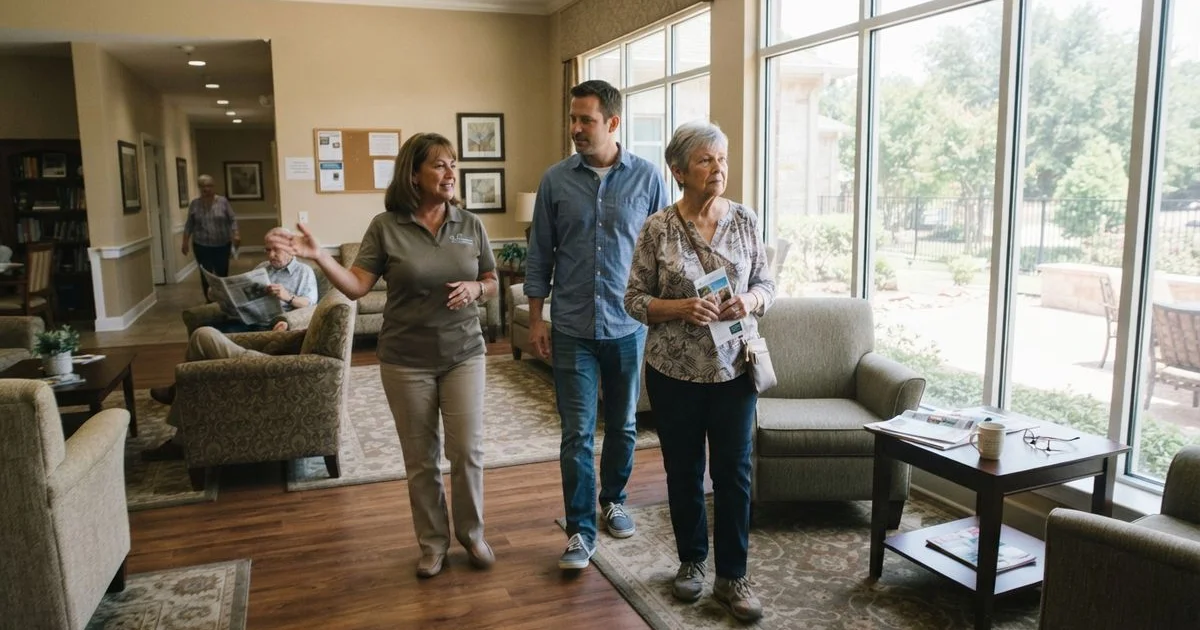
Helping a parent find a new place to live carries a different weight than apartment hunting for yourself. There’s the practical checklist, and there’s the harder conversation underneath it about independence, safety, and what your parent is actually ready for. Greater Dallas has a small but real set of senior living apartment communities, and getting clear on what these communities are, and aren’t, makes the rest of the search easier.
Know what you’re actually looking at
“Senior living apartment” describes an independent, age-restricted rental community, not a licensed care facility. Residents live on their own, sign a standard lease, and manage their own daily needs, sometimes with light on-site support like transportation or organized activities. This is a meaningfully different product from assisted living, memory care, or a nursing home, which involve licensed medical staff and a different regulatory category entirely. If your parent has care needs beyond independent living, a senior living apartment likely isn’t the right fit, and it’s worth having that conversation honestly before you start touring.
What actually matters on a tour
Beyond the general things any apartment tour covers, a few details matter more specifically for an aging parent:
- Single-level access or reliable elevators. Stairs become a real barrier over time, even for parents who feel fine now.
- Bathroom safety features. Grab bars, walk-in showers, and adequate lighting aren’t universal even in senior-marketed communities. Ask directly.
- Emergency response systems. Some communities offer a pendant or pull-cord system connected to on-site staff; others don’t offer anything beyond a standard maintenance line.
- Proximity to medical care and pharmacies. A community 30 minutes from the nearest urgent care is a different daily reality than one five minutes away.
- Social and activity programming. Isolation is a real risk for aging renters living alone, and a community with regular organized activities can matter as much as the unit itself.
A simple comparison checklist
| Category | What to check |
|---|---|
| Accessibility | Single-level layout, grab bars, walk-in shower, elevator reliability |
| Safety | Emergency call system, well-lit walkways and parking, secure entry |
| Location | Distance to pharmacy, primary care, and family members |
| Cost | Base rent, any age-based or income-based program eligibility, utilities included |
| Community | Organized activities, dining options if any, general resident mix |
The conversation matters as much as the checklist
A parent weighing a move often has more mixed feelings than they’ll say out loud, pride about independence, worry about being a burden, or simple resistance to change. Bringing them into the process early, rather than presenting a shortlist as a done deal, tends to go better. Let your parent lead the tour conversation where possible, and ask the leasing staff questions your parent might not think to ask themselves, like what happens if care needs increase down the road.

If cost is the barrier
Some senior living communities participate in income-based or age-based affordable housing programs, which can lower the effective rent significantly for a qualifying household. These programs have their own separate eligibility rules around income and documentation, and they’re worth asking about directly even at a community that doesn’t advertise itself primarily as affordable housing.
When to bring in outside help
If your parent’s needs are unclear or seem to be changing, a geriatric care manager or your parent’s physician can help assess what level of housing and support actually fits, rather than guessing based on how a tour goes. If you’re searching for a different family member instead, the guide to renting with kids in Greater Dallas walks through the same kind of practical checklist for parents renting with children. This guide covers general housing considerations and is not medical or care-planning advice; for questions about your parent’s specific care needs, consult a qualified healthcare or elder-care professional. You can review how we score senior living communities in our methodology, and start from the homepage to see current options across Greater Dallas.
FAQ
- Is a senior living apartment the same as assisted living or a nursing home?
- No. Senior living apartments in a directory like this one are typically independent, age-restricted rental communities, not licensed care facilities. If your parent needs daily medical care, medication management, or supervised assistance, that's a different category of housing entirely, and it's worth confirming this distinction with any community before touring.
- What age or income requirements apply?
- Age-restricted communities commonly require residents to be 55 or 62 and older, depending on the property. Some also participate in income-based affordable housing programs with their own separate eligibility rules, so ask about both age and income requirements specifically.
- Should my parent tour alone or should I go with them?
- Going together is worth the trip if you can manage it. A second set of eyes tends to catch things like accessibility gaps or vague answers to direct questions that are easy to miss during a single tour, especially one your parent might feel some pressure to like.
- What if my parent needs more support than an independent apartment provides?
- That's worth figuring out before you sign anything, not after. A geriatric care manager, a doctor, or an elder-law attorney can help assess your parent's actual care needs and whether independent senior living, assisted living, or another option is the right fit.